


Coverage measured in people, not towers.
Every handset running BitMadWall is a node, a relay, and infrastructure that crosses a border in a pocket. Bluetooth Low Energy, Wi-Fi Direct and paired LoRa form one mesh; routing, keys and settlement all run on the device. There is no tower to seize, no licence to revoke, no switch to throw.
Range, in orbits.
Four tiers around the device in your hand, drawn to a log scale. The inner two are the everyday fabric. The third joins settlements. The last is not a radio at all. It is what happens when no node ever reaches the internet.
How the protocol decides what moves.
Radios move bits. The protocol decides who forwards what, how far it travels, and what happens when a path touches a wider network.
Flood, bounded
Every message carries a hop budget, seven by default, and a fingerprint so no device ever carries it twice. Each phone passes it a little further, on a small random delay, so a crowd of radios takes turns instead of shouting at once.
Self-healing
No routing tables. Routes are rediscovered on every send, so nodes appear, move, and vanish without ceremony. Every additional device is an alternate path, the inverse of a network that degrades under load.
The data mule
A message that cannot reach its recipient waits, sealed, on every device that heard it. A traveller walking to the next village carries it, delivered hours later, by a person, and no one had to know.
Opportunistic bridging
Any device that regains internet becomes a gateway for everyone; it already holds the pending traffic, so the flush is immediate. Duplicates are harmless; the chain accepts a transaction once.
The peers a device can actually reach.
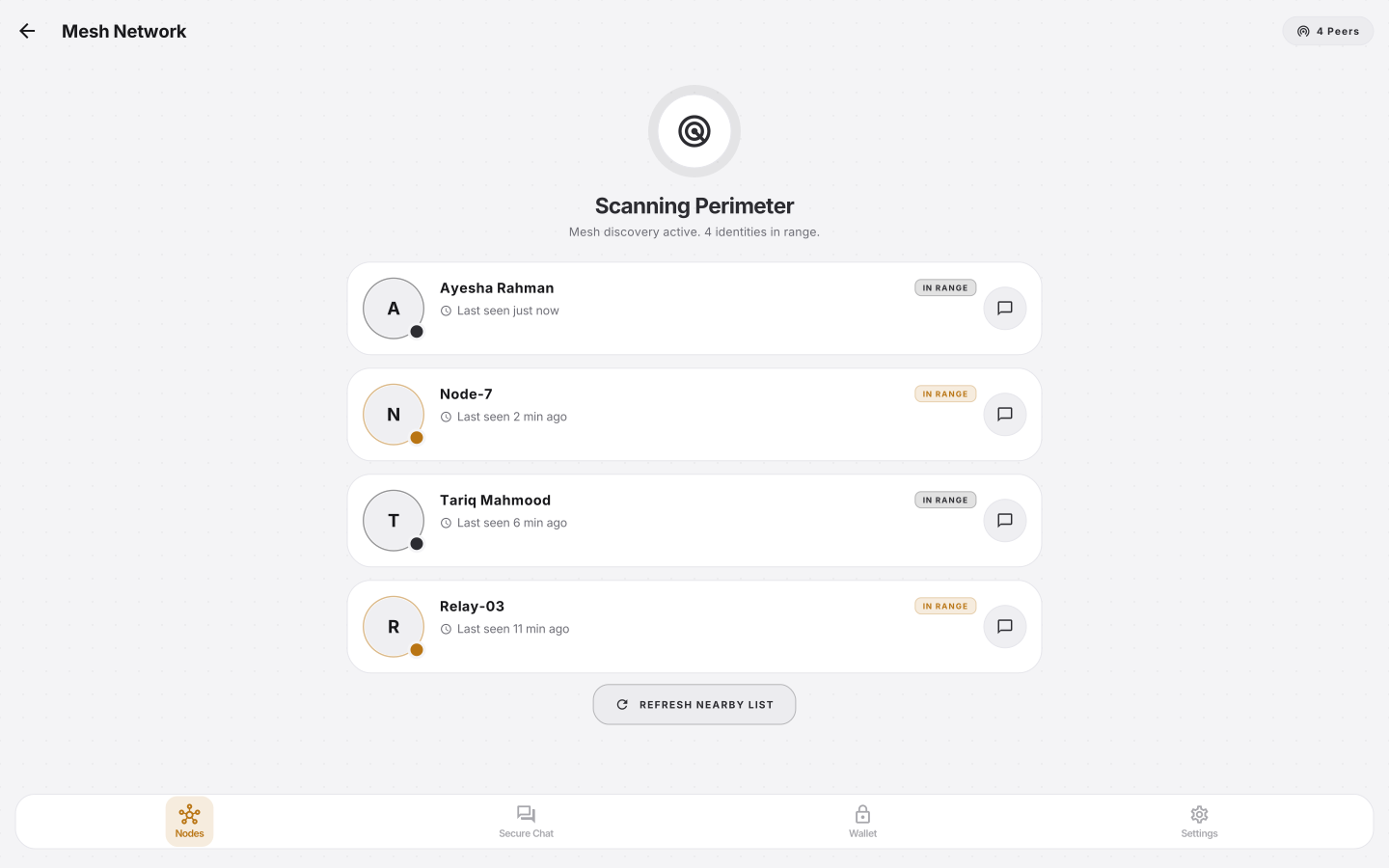
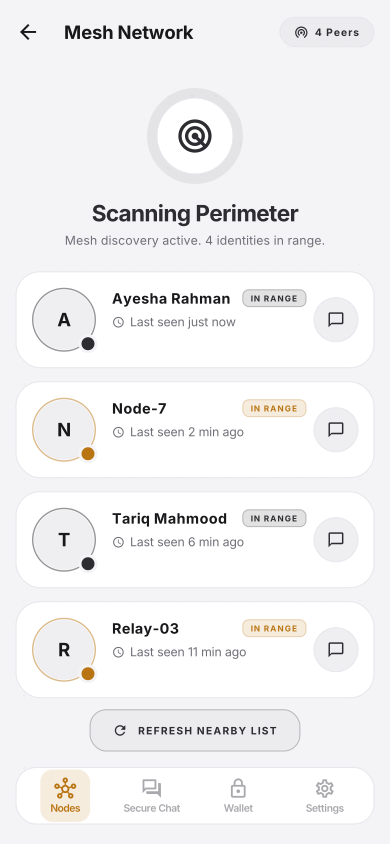
Discovery, mid-scan, with four identities in range.
Five modules, one spine.
The chat and the wallet are siblings, not layers: both hand their payloads to the same cryptographic core, and the mesh below carries sealed bytes without knowing which of the two it is moving. That indifference is the design. A new chain, or a new message type, plugs into its own module and changes nothing beneath it.
Client application
Local-first interface. Contacts, channels, balances; nothing stored anywhere else.
Chat module
One-to-one and group messaging. Ephemeral by default; panic wipe.
Transaction module
The offline wallet. Builds and signs a Bitcoin payment with no network at all.
Cryptography and identity
Locks, seals and signs everything above it, using published standards. Identity is a key, not a phone number.
Mesh networking layer
Passes sealed data phone to phone over Bluetooth and Wi-Fi Direct. At most seven hops, never the same message twice.
Internet relay
Any phone that touches the internet delivers the queue to the chain, once.
The exit-relay moment.
A transaction signed in the dark is final in every way but one. The mesh carries it, sealed, until any phone, yours or a stranger's, touches the internet and flushes everything it holds to the Bitcoin network.
- Pending means pending
- Until it is mined, an incoming transaction is a promissory note. The application says so plainly, and does not show unconfirmed funds as spendable.
- The chain is the arbiter
- Offline, no device can prove a coin was not already spent elsewhere. That is a property of the physics, not a flaw in the software, so the interface teaches it instead of hiding it.
Want the full technical walkthrough?
We will go through how messages are carried, how far they travel, and how the mesh behaves in the field.
Or write directly to info@tashitech.ai.